Anoraks and Authority: What the Sideline Coats Say About a Non-League Club

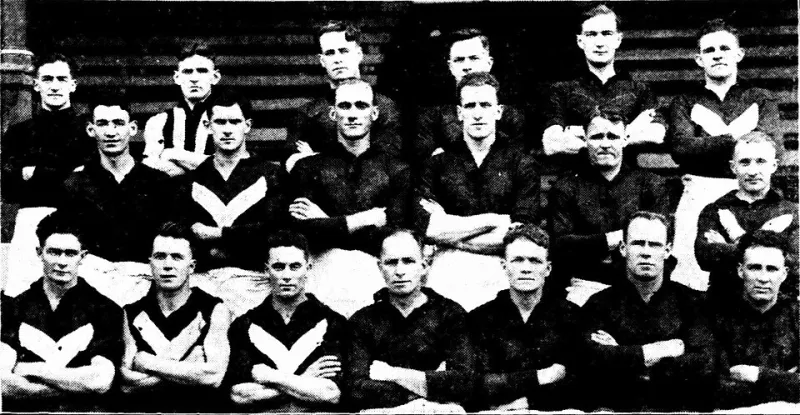
At about 2:55pm on a non-league Saturday, the match has not started but the touchline is already talking. Not loudly. Not in tactics. In coats. The manager is zipped to the chin in something that could double as a sleeping bag. The chairman is hovering in a gilet, pretending the cold is a rumour. A substitute is bouncing on his toes in a hoodie that looks one gust away from surrender. The physio, meanwhile, is the only person dressed like they have read the forecast.
You can learn a lot about a club before kick-off. League tables fib in November. Form is a mood. But the sideline coat rack is honest. It tells you who pays for things, who volunteers, who forgot their big coat and who has quietly accepted that Saturday afternoon is going to be spent standing in a wind tunnel behind the dugout.
The manager's bench jacket: one size fits all ambition
Start with the manager. The oversized bench jacket is the classic non-league managerial garment: padded, club-crested, usually a size too big because it was ordered as 'one size fits most' in a catalogue three seasons ago. The sleeves hang past the knuckles. The pockets contain a team sheet, a spare whistle, half a packet of mints and possibly a receipt from a kit supplier that nobody has filed.
That coat says the club has a bench jacket rather than a bespoke wardrobe. It says volunteer. It says the manager is more concerned with whether the left-back has turned up than whether the left-back's jacket matches the sponsor board. If the bench jacket is pristine and embroidered with the manager's initials, you are probably at a club with a bit of commercial polish. If the zip is held together by a safety pin and the crest is peeling, you are probably at a club where the same coat has seen three promotions, two relegations and a relegation appeal.
Either way, the manager's coat is the office. It gets thrown over a plastic chair, draped across a kit bag, and worn during a touchline row about a throw-in. It is not fashion. It is infrastructure.
The chairman's gilet: power without sleeves
The chairman's gilet is a beautiful thing. It is the garment of a person who wants to look involved without being mistaken for staff. A gilet over a shirt says 'I am approachable, but I am not doing the warm-up.' A club-branded gilet says the commercial team has been busy. A plain, expensive-looking gilet says the chairman has a decent job and is not afraid to let the touchline know.
A chairman in full waterproofs is a different breed entirely: hands-on, probably carrying a spare set of corner flags, likely to be found fixing a gate at 1:30pm. A chairman in a long overcoat is either old-school or waiting for a civic reception that never arrives. The gilet sits in the middle: mobile, practical, slightly vain. It is the outerwear equivalent of a firm handshake and a promise to 'look into' the tea bar leak.
If the chairman is wearing a gilet in November and still standing there at 4:45pm, respect. If the gilet is accompanied by a clipboard, worry. Somebody is about to talk about ground grading.
The substitute's hoodie: hope, youth and a bin bag
The bench is where the coat hierarchy gets brutal. Substitutes arrive in all shapes of outerwear. Some have proper padded jackets. Some have club rain jackets that rustle like crisp packets. Some have a hoodie, shorts and the look of a player who was told 'just bring boots' and took it literally.
The hoodie says 'I am not in the starting XI.' It also says 'I am ready.' The gap between those two messages is where non-league football lives. A bench full of matching rain jackets suggests organisation. A bench of mixed hoodies, borrowed coats and one lad in a thin fleece suggests a club running on favours and WhatsApp messages. Neither is necessarily worse. One is just more likely to involve a bin bag being used as a makeshift rain cover for a kit bag.
There is a pecking order, too. The first sub gets the good coat. The second sub gets the coat that smells of deep heat. The third sub gets the physio's spare waterproof and is told not to complain. By 3:20pm, the hoodie has usually been abandoned for something borrowed. That is not weakness. That is squad unity.
The physio's waterproof: the only adult in the room
The physio is often the best-dressed person at the ground, because they are dressed for actual weather. A proper waterproof, pockets deep enough for tape, gloves, cold spray and a bag of sweets. If it is club-branded, excellent. If it is a personal hiking jacket that has seen several peaks and a dozen ankle rolls, also excellent. The point is that the physio's coat says 'I have a plan.'
That matters. A club with a physio in a serious waterproof is a club that has thought about the 70th minute. A club with a physio in a hoodie and a rucksack is still a club with a physio, which is more than some have. But the waterproof is a signal of preparation. It is the sideline equivalent of a well-stocked first-aid kit: boring, reassuring, essential.
The tea bar fleece and the linesman's layers
Do not ignore the supporting coats. The tea bar volunteer in a fleece and apron is the reason the second half is bearable. The linesman in three layers under an official jacket is the reason the offside trap has a chance. The parent in the parka is the reason the sub has a lift home. The club secretary in a waterproof coat with a lanyard is the reason the fixture is happening at all.
A highly unscientific ranking, then: physio's waterproof first, manager's bench jacket second, tea bar fleece third, chairman's gilet fourth, substitute's hoodie fifth, director's overcoat sixth and anyone in trainers seventh, because there is no excuse for trainers on a touchline in November.
What the coat ladder says about the season
If the bench has matching jackets, the club has a kit deal, a sponsor or a very persuasive volunteer. If the bench is a patchwork of hoodies and borrowed coats, the club is being held together by people who care. If the manager has a club jacket but the subs have no rain gear, the budget has priorities. If everyone has a proper waterproof, somebody has planned for winter. If the chairman is still in a gilet at 4:45pm, either the game was brilliant or the hospitality is nearby.
None of this is science. It is touchline reading. But it is usually more reliable than a pre-match prediction. A club's coats tell you how it handles the cold, the rain and the small indignities of non-league football. They tell you who carries the bags, who fixes the gate and who will still be there when the floodlights go off.
So next time you arrive at a ground, look at the bench before the warm-up. Count the gilets. Check the physio's pockets. See whether the manager's zip is working. The table can wait. The coats have already given their team talk.