Flags Down, Screens Off: What the 2026 World Cup Left Behind in Britain's Pub Back Rooms
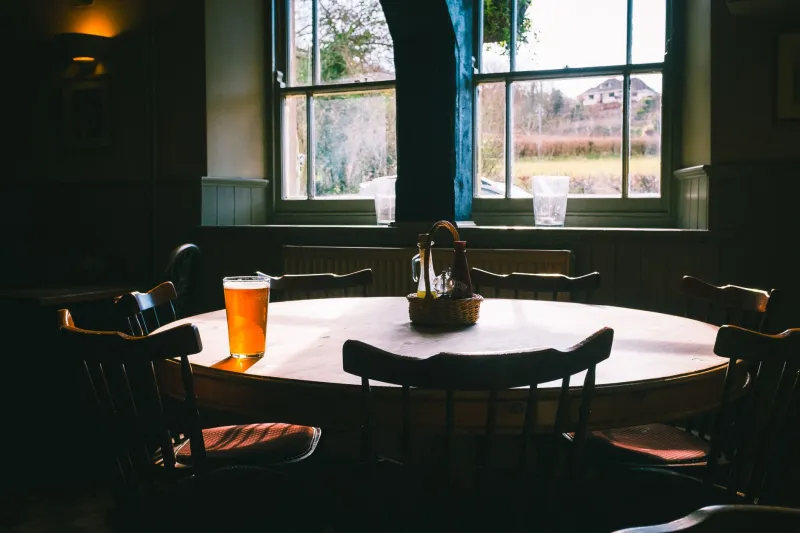
The flags came down in stages. First the big cross taped across the lounge window, then the bunting somebody's nan had crocheted, then — some time in mid-August, when nobody was really watching — the laminated wallchart, its knockout boxes still stubbornly blank.
Four months on from the 2026 World Cup, the back rooms that briefly felt like the centre of the world are back to being back rooms: quiz night on a Thursday, a christening buffet, a stack of chairs nobody is allowed to move. But the tournament hasn't entirely gone. It left a projector on finance, a few hundred new numbers in the till drawer, and a question grassroots football still hasn't properly answered: what happened to the people who turned up for the occasion and had a genuinely good time?
The Big Screen Isn't Paying for Itself
Ask licensees and you get less doom than you'd expect, and rather more arithmetic. June and July were terrific — a well-behaved tournament, long light evenings, a country that briefly remembered it likes sitting in a pub with other people.
"We had ninety in for the semi," one licensee in Stockport told me. "I've had eleven on a Tuesday since." She spent £2,300 on a projector and a pull-down screen, spread over twelve months at 0% interest, and is still paying off the last of it. The screen stays up. It earns its keep on Premier League weekends and European midweeks, though the subscription costs keep climbing and the Tuesday-night Champions League crowd is a very different animal from the Tuesday-night World Cup crowd.
That's the first thing worth saying plainly: the tournament crowd was never a pub crowd. It was an event crowd. Some of them discovered they liked it. Plenty went home and stayed home, and no amount of bunting was going to change that.
The Curious Case of the New Regulars
Down at the sharper end — the five-a-side centres, the council astros, the cages with a 9pm slot and a car park that smells of chips — the story rhymes. June brought a rush. Lads who hadn't kicked a ball since school rang round and booked pitches. Local leagues that had been running at eleven teams suddenly had fourteen.
By September, one of those new teams had quietly folded. Two were still going, but rotating a squad of six and begging for ringers on a Wednesday. The killer isn't the football. It's the Tuesday 9pm slot in November, when it's raining sideways, one of the lads has a bad ankle, and the alternative is the sofa and a takeaway.
Retention is the whole game. It's the same three or four divisions further down, where a World Cup summer brought a spike in enquiries and almost no increase in the number of people prepared to stand on a cold touchline in February.
A Club Night Is Not a Season Ticket
Here's the bit that ought to sting. A lot of non-league and grassroots clubs did the tournament brilliantly — big screen in the clubhouse, sausage rolls, kids running riot outside — and then went completely quiet. No email capture at the door. No "first session free" voucher printed on the back of the raffle tickets. No follow-up beyond a Facebook post that reached the same forty people who already go every week.
Compare that with the pubs that held on to people. Almost without exception, the ones that kept them did something small and unglamorous: they learned names, they saved the same stool for the same face, and they made turning up again feel easy rather than brave.
Grassroots clubs can't out-market the Premier League. They can out-welcome it. A printed fixture list. A tea bar that's actually open. Somebody on the gate who says hello rather than taking a fiver through a car window. Open training sessions in August, when the weather's still kind and nobody's committed to anything. Women's recreational sessions and walking football have been doing this quietly for years and have the retention numbers to prove it — no fireworks required.
What Actually Sticks
The honest answer to "who stayed?" is: not many, but not none. A handful of new regulars at the bar. Two five-a-side teams out of three. A few families who came for the tournament and discovered the local club is eight quid for an adult and free for the under-12s, which is cheaper than the cinema and lasts longer.
That's not nothing. In a sport where the top end hoovers up both money and attention, a tournament summer is one of the few windows when the pyramid gets a look-in at all. Clubs that treated it as a marketing campaign — one screen, one night, one big push — got a July. Clubs that treated it as a chance to build a habit got the thing that actually matters: people who come back when there's nothing to celebrate except the fact it's Saturday.
The Back Room Isn't Dead
Come November, the projector's on for a lunchtime kick-off, there's a pot of tea going, and somebody's arguing about a throw-in from three weeks ago with real venom. The flags are in a bin bag under the stairs. The wallchart got recycled.
The World Cup didn't leave a legacy in the way anybody planned. It left a screen, a few phone numbers and a reminder that the hard work of matchday culture isn't the occasion — it's the Tuesday after the occasion, when the weather's grim and nobody's watching but the people who always are.