Wet Noses and Worn Leads: The Four-Legged Regulars Who Really Own Non-League Football
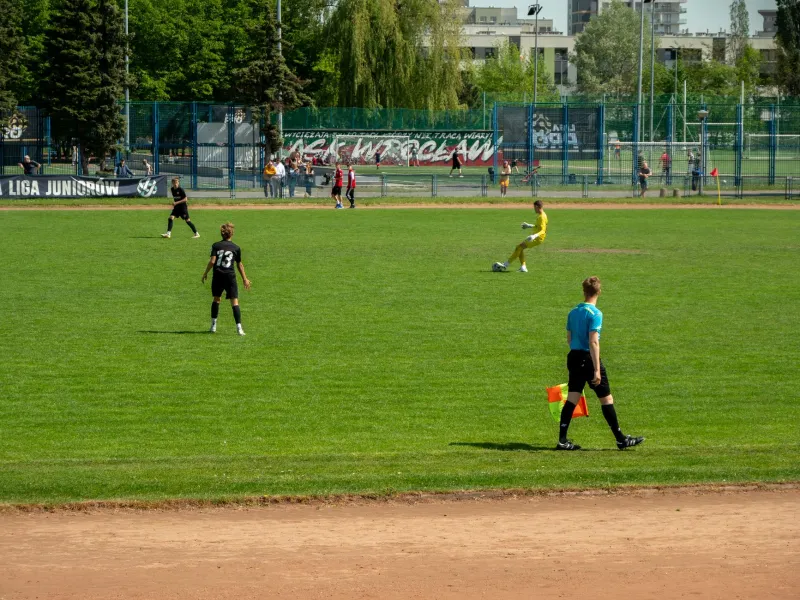
Non-league football has a reliable cast. The treasurer with a clipboard. The bloke who shouts ‘away’ at nobody in particular. The teenager selling raffle tickets with the enthusiasm of a man waiting for a bus. And then, usually tied to a fence post near the tea hatch, the dog. The first three get a mention in the programme notes. The dog gets the real respect.
The Clubhouse Labrador Has Seen It All
Every non-league ground has one. A Labrador, or Labrador-adjacent lump, with a coat like a worn carpet and the calm demeanour of someone who has watched 400 goalless draws and made peace with it. This dog has a season ticket in all but name. It knows the sound of the tea urn clicking on. It knows the exact moment the bacon butties come out. It has a preferred spot by the clubhouse door where it can monitor both the turnstile and the biscuit situation.
It does not react to goals. It reacts to the final whistle, because that means people will start moving and someone might drop a chip. In many ways, it is the most emotionally stable person at the ground.
The Nervous Whippet and the Corner-Flag Problem
Then there is the other type: the whippet who treats every match as a personal ordeal. It hates corners. It hates the linesman’s flag. It especially hates the one bloke who shouts ‘man on’ with the volume of a fire alarm. This dog spends most of the game pressed against its owner’s leg, shivering in a coat that cost more than the club’s warm-up balls.
And yet it turns up every week. That is the thing about touchline dogs. They do not choose the fixture list. They do not check the weather. They are simply told it is Saturday, bundled into the car and expected to cope with 90 minutes of shouting, whistling and the occasional stray ball. The nervous whippet is not a mascot. It is a hostage with a nice collar.
Water Bowls, Lead Tangles and the Unwritten Code
Dogs at football come with an etiquette all of their own. Ask before you pet. Never let your dog drink from the communal bowl if it has just been rooting through a puddle. Keep the lead short near the touchline, especially when the full-back is warming up and has the spatial awareness of a dropped cone. And if your dog does its business on the pitch, you are on cleanup duty before the referee has finished blowing for kick-off.
The water bowl itself is a cultural artefact. A fresh bowl, refilled at half-time, says something about a club. An ice cream tub with a bit of tap water sloshed in says something else. Neither is necessarily bad. Non-league football has always been a make-do-and-mend operation. But the dog notices. The dog always notices.
The Most Honest Supporters in the Ground
Dogs do not care about promotion. They do not care about the play-offs, the budget cuts or the fact that the club has lost its last four home games. They care about the smell of the burger van, the patch of grass that gets the afternoon sun and whether the person holding the lead is likely to share a bit of sausage roll.
That is why they might be the most honest supporters in the ground. A dog cannot pretend to enjoy a 0-0 draw. It cannot perform loyalty for the cameras. It is either comfortable or it is not. It either wants to be there or it is waiting by the gate. There is no posturing, no agenda, no half-time pint diplomacy. Just a wet nose and a willingness to sit through whatever the fixture list throws at it.
In Sunday league, this honesty is even more obvious. The pitch is a bog. The changing rooms smell of deep heat and damp socks. The referee is doing his best. And there, picking its way through the mud, is a spaniel who has clearly been promised a walk and has instead been given a 10:30 kick-off on a council field in November. It does not complain. It just finds the least muddy patch of touchline and gets on with it.
A Nod to the Lead-Tangled Faithful
So next time you see a lead tied to a fence, a bowl by the clubhouse door and a dog asleep under a pile of training jackets, give it a nod. That dog has put in more hours than some substitutes. It has endured more cold Tuesday nights than the club photographer. It has never once asked for a complimentary programme or a mention on the club’s social media.
Non-league football is built on volunteers, raffle tickets and people doing unpaid jobs because they love the place. The touchline dog is the purest version of that. No rota. No expenses. No complaints. Just muddy paws, a worn lead and a spot by the tea hatch that it has quietly made its own.