The Fork Has the Final Say: Anatomy of a Frozen Non-League Morning
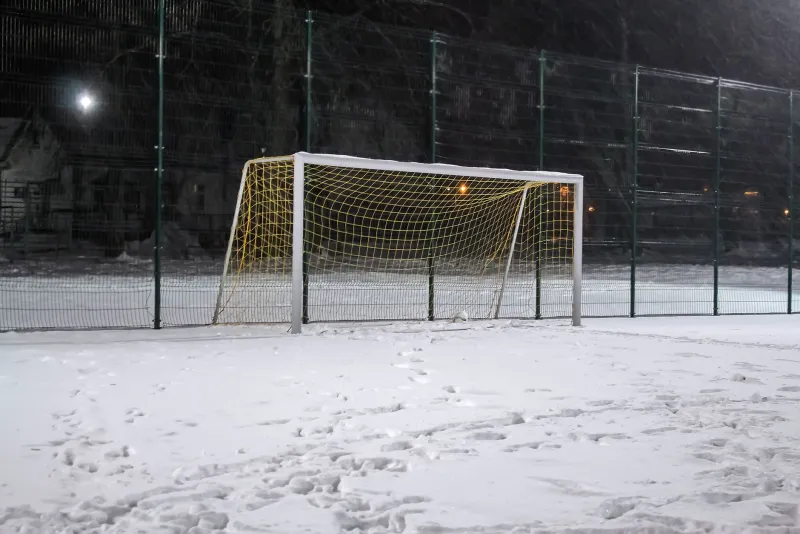
At 7:42am on a Saturday in November, Marsh Lane is still a rumour. The floodlights are off, the tea hatch is shut and the only sound is a diesel van idling by the gate. Dave, the club secretary, is standing on the halfway line in a coat that has seen more winters than the stand. He has a torch in one hand and a fork in the other. In his pocket, a WhatsApp group is already asking the question that matters more than the league table: is it on?
This is non-league football's real morning ritual. Not the team talk, not the warm-up, not the programme seller counting change. The pitch inspection. It is part science, part folklore and part crisis management, and it usually lands on the least glamorous person at the club.
The first look is always in the dark
Nobody inspects a pitch at 9am if they can help it. By then the away coach is moving, the ref is on the road and the caterer has bought the bacon. So the first look happens early, often before sunrise, when the frost sits in the shade like a bad mood and the ground is hard enough to make a dropped ball sound like a drum.
Dave does not need a qualification to do this first check. He needs a torch, a fork and the ability to disappoint people. He walks the goalmouths first, because that is where the winter kills a game. Then the shaded strip down the main stand side. Then the middle, where the ball will bounce if the thaw comes late. He pushes the fork into the turf. If it goes in with a satisfying crunch, there is hope. If it skids off like a stone, there is a conversation to be had.
This is not the official inspection. The referee has the final say, and rightly so. But at this level, the volunteer's morning call is the trigger for everything else. It is a recommendation, a logistical warning and a social verdict all at once. The referee might still turn up and call it off. The league might ask for photos. But the volunteer's message in the group chat is what starts the chain of cancellations.
The fork is not a metaphor
People outside grassroots football imagine a pitch inspection is a bloke walking about looking worried. In reality, it is a series of small, unglamorous tests. The fork checks the depth of the frost. The torch rakes across the surface to show the shine of standing water. A ball is rolled across the box to see if it holds up. Someone stamps a heel into the six-yard area and everyone pretends that is scientific.
At Marsh Lane, the rules are unwritten but firm. If the frost is only in the shaded corners and the forecast is for a mild morning, you wait. If the middle is frozen and the sun is not due until noon, you start ringing people. If there is standing water in the goalmouth, you do not need a second opinion. You need a refund policy.
The volunteer is not just judging the pitch. They are judging the away coach. They are judging the referee's journey. They are judging whether the bar has already taken delivery of a weekend's stock and whether the tea urn has been switched on. A pitch inspection at this level is a risk assessment disguised as a weather report.
The away coach is already moving
This is the bit that keeps secretaries awake. A call at 8:15am might be sensible for the home club. It might be useless for the away side, whose supporters' coach left at 6:30am and is already 90 miles down the road. Cancel too late and you have a coach full of people who have spent their Saturday morning staring at the back of a seat for nothing. Cancel too early and you might have called off a game that would have been perfectly playable by 2pm.
There is no perfect answer. That is why the job is thankless. The volunteer is balancing the pitch against the pocket. The home club might lose a few hundred pounds on catering if the game goes. The away club might lose a coach deposit if it does not. The league wants consistency. The referee wants safety. The supporters want a game. Nobody wants to be the person who made the wrong call.
And yet someone has to make it. That is the strange power of the pitch inspection. The most important decision of a non-league Saturday is often made by a volunteer in a fleece, standing on a frozen pitch, holding a fork.
The bar has already ordered
There is a romantic idea that non-league clubs run on passion. They run on passion and stock rotation. By Friday night, the bar has ordered, the pies have arrived and the programme has been printed. The volunteers have already spent the week chasing a referee, confirming the away team's arrival and praying the boiler holds out. A frozen pitch does not just cancel a match. It cancels a small economy.
That is why the call is never purely about football. It is about the burger van, the 50-50 draw, the mascot's mum and the lads who have already started on the pre-match pints. It is about the away fan who booked a train and the home fan who promised his kid a first game. The pitch inspection is a decision about people's Saturdays, and at this level, Saturdays are not small things.
The unwritten rules of the call
Every club has its own code. Some secretaries will not call a game off until they have seen the referee's face. Some groundsmen trust their boots more than the forecast. Some leagues want photographic evidence, some want a phone call, some want a message in a group chat that nobody can find three weeks later.
But the broad rules are the same. Do not call it off because you are nervous. Do not leave it on because you are hopeful. Do not let the bar stock make the decision for you. Do not let the away coach bully you into a game that will be dangerous by kick-off. And whatever you do, do not announce anything until the referee has been consulted and the league has been told.
The best inspectors are not the ones who are always right. They are the ones who are clear. A firm call at 8:30am is a kindness. A vague maybe at 10am is a curse.
Why nobody wants the power
The strange thing is that the person with the fork rarely wants the authority. They would rather be watching the game with a cup of tea. They would rather be arguing about the offside trap. They would rather not be the one who has to tell a changing room full of players that the match is off and the coach is already turning around.
But they do it because someone has to. Because the club needs a decision. Because the referee is still an hour away. Because the league office is closed. Because the pitch is frozen and the sun is not coming.
The 9am verdict is not really a verdict on the pitch. It is a verdict on the volunteers who hold the whole thing together. The fork has the final say because someone has to stand in the cold and make the call. And in non-league football, that is still the most powerful job on a Saturday morning.