The Plastic Throne: Inside the Unwritten Law of the Non-League Dugout
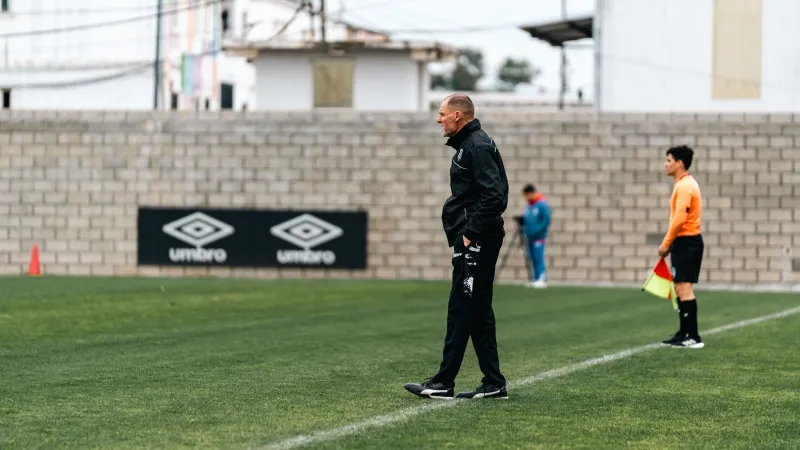
Every non-league club has a constitution, a treasurer and a set of minutes that nobody reads. But the real governance happens elsewhere: on a plastic bench that’s seen more drama than the clubhouse telly. The dugout is where tracksuits replace suits, where a clipboard can start a cold war, and where the seating plan is enforced with the quiet menace of a headteacher’s stare. You want to know who actually runs the place? Forget the AGM. Watch who gets the dry spot.
The Dry Spot and the Doctrine of First Arrival
There is a corner of every dugout that stays dry. It’s not always the most sheltered, but it’s the one that’s been claimed by the manager’s assistant, or the physio, or the bloke who’s been doing the warm-ups since 2009. The dry spot is non-negotiable. It is passed down through a line of succession that makes the House of Lords look progressive. New coaches arrive, look at the dry spot, and instinctively know: that’s not yours, son.
The rest of the bench is a lottery of damp arses and drippy hoods. You can tell a club’s hierarchy by who is prepared to sit in the wet. The gaffer never sits in the wet. Neither does the captain, unless he’s making a point. The sub who’s been there for three seasons and never gets on? He sits wherever. He’s learned not to complain. The dry spot is the non-league equivalent of the corner office, minus the pension and the pot plant.
Clipboard Custody: The Real Chain of Command
The clipboard is a sacred object. It holds the teamsheet, the warm-up drills, and occasionally a note that says ‘get it in the mixer’ in biro. But who holds it? That’s the question. At some clubs, the manager clutches it like a life raft, even though he hasn’t looked at it since kick-off. At others, it’s the assistant’s job, a sign that he’s the anointed one, the heir apparent.
Then there’s the clipboard custodian who isn’t a coach at all. He’s the bloke who brought the water bottles and somehow ended up in charge of the tactical diagram. He’s the club’s unofficial chief of staff, and he knows it. Watch him hand the clipboard to the manager at half-time. That’s a power move. That’s the dugout equivalent of passing the conch.
The Manager’s Peg and the Lucky Coat
Every manager has a lucky peg. It’s in the changing room, not the dugout, but it dictates the whole atmosphere. Nobody hangs their coat there, not even in pre-season. The lucky coat itself is a separate matter. It’s the same coat he wore when the club won 1-0 at the league leaders in the rain. It hasn’t been washed. It smells of deep heat and superstition. You don’t question the coat. You just accept that it’s part of the furniture.
The coat peg is a reminder that non-league football is a world of small rituals that carry enormous weight. Move the peg, move the manager. It’s that simple. New kit men learn it the hard way. So do new chairmen who think they can bring in ‘modern ideas’ like peg rotation. They don’t last long.
Warm-Up Theatre and the Sub Who Never Sits
The warm-up is not just a physical exercise. It’s a performance. The subs who are actually going to get on know the drill. They stretch with purpose, they sprint with intensity, they glance at the manager at exactly the right moment. The sub who never gets on? He still goes through the motions, because he’s a professional, but his heart isn’t in the high knees. He’s been here before. He knows that the 87th-minute substitution is a myth.
Then there’s the sub who never sits down. He stands by the touchline, arms folded, occasionally shouting something that sounds like encouragement but is actually a tactical critique. He’s not the manager. He’s not the assistant. He’s just a bloke who has decided that standing is a statement. The bench seating plan is his nemesis. He will not be confined to the plastic. He is the dugout’s free radical, and every club has one.
The Bench as a Living Archive
If you want to understand a non-league club, spend ninety minutes watching the bench. Watch who sits where when the rain comes. Watch who gets the dry spot when the manager is serving a touchline ban. Watch who holds the clipboard, who wears the lucky coat, who never sits down. It’s all there: power, loyalty, superstition and the quiet desperation of a sub who knows he’s not getting on.
The dugout is not just a bench. It’s a parliament of tracksuits, a council of deep heat and half-time oranges. And the next time you see a non-league manager standing in the rain, look behind him. There’s a whole government in session.