Peel Appeal: The Social History of Sunday League's Half-Time Orange
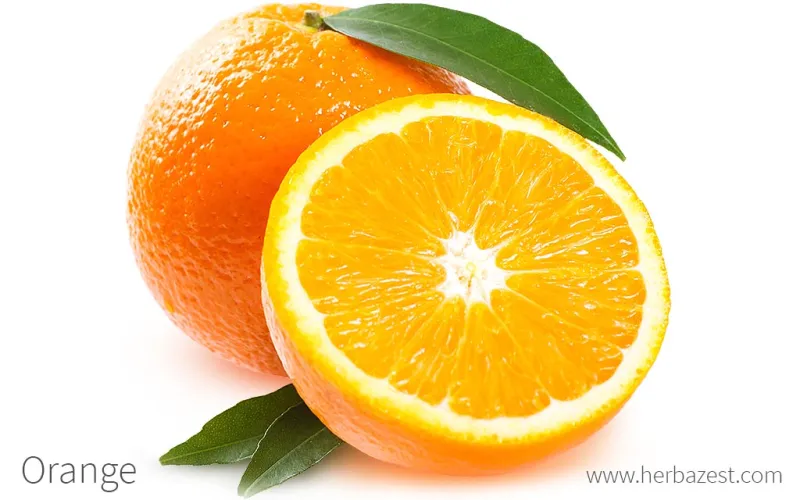
Photo: orange segments cut on chopping board half time junior football, via www.herbazest.com
The orange is the only part of Sunday league football that has never needed a rebrand.
No sponsor's logo. No isotonic marketing copy. No influencer holding one at arm's length. Just a net bag from a supermarket, a chopping board that has seen things, and a volunteer slicing segments at 10:20 on a Sunday morning while the kettle boils behind them.
It is, quietly, the most consistent act of care in the whole amateur game.
Who actually buys them
Follow the money and you'll find there isn't any. A net bag costs about a pound and a half. Nobody claims it back. Nobody has ever submitted a receipt. The orange economy runs on someone deciding, on a Saturday night, that the lads will want something at half-time.
In junior football it's a rota — a fixture in its own right, negotiated over WhatsApp with the same seriousness as a referee appointment. In adult Sunday league it's more mysterious. Usually it's the person who does the kit. Sometimes the manager's partner. Occasionally a player's dad who turned up once in September and never really left.
Whoever it is, they are almost never named in the match report.
The knife question
How the orange is cut tells you everything about the club.
At a well-run under-10s, the segments arrive on a plastic plate, peeled, deseeded, arranged with the sort of care usually reserved for a wedding buffet. At an adult Sunday side, the orange is often produced from a carrier bag and thrown at a defender with a single instruction: sort it out.
Between those two extremes sits the true artisan of the amateur game — the person who cuts six wedges on a tea towel in the front seat of a car, with a knife that lives in the glovebox, while a nine-year-old in shin pads asks if there's another one.
Forensics of the peel
There is a corner of every changing room in Britain where the peel collects. It is not the bin. It is next to the bin. It is always damp, always faintly orange-scented, always trodden into a flat orange carpet by a pair of astro trainers at 2:47pm.
Nobody knows who is meant to clear it up. Everyone knows who always does.
The peel corner is the honest record of a club's culture. A tidy club has a bag for it. A chaotic club has a small orange archaeological site developing behind the door, and a cleaner who has made peace with it.
Sugar, salt and the second-half surge
The sports science case is modest: a few segments deliver a bit of quick sugar at a point when glycogen is dipping and the legs are starting to go. The psychological case is much stronger.
Half-time is the only moment in a Sunday league match where everybody is in the same room and nobody is shouting about a throw-in twenty minutes ago. The orange gives people something to do with their hands. It breaks the silence in a dressing room that has just conceded from a corner. It is a small, cheap, physical reminder that someone thought about you.
You cannot buy that with a caffeine gel.
The junior pipeline
The orange is also the great class marker of youth football. Under-nines: parents hovering with hand wipes. Under-thirteens: lads who refuse fruit on principle and then eat three segments when nobody's looking. Under-sixteens: something has gone badly wrong and the oranges have been replaced by a multipack of something fizzy and fluorescent.
And then, ten years later, those same lads are thirty-one, hungover, losing 2-0 on a pitch with a slope, and the only thing that gets them through the second half is a wedge of orange handed over by a bloke in a padded coat who has done it every week since 2012.
The rise of the gel lads
There is a new character on the touchline, and he has brought a nutrition plan. Electrolyte tabs, a protein bar, a small tupperware of something beige. He is not wrong. He is just joyless about it.
The orange survives him because it is unarguable. It is cheap, it is real, and it does not require a shaker bottle or an explanation.
The ones who never forget
Every club has a person who has bought the oranges for over a decade. They are rarely on the committee. They are rarely thanked. They simply arrive, and the fruit appears, and it has been that way so long that players who joined in 2019 assume it is a service the club provides.
When that person finally stops — moved away, got ill, had enough — the absence is felt within a fortnight. The half-time huddle gets shorter. The second half gets flatter. Nobody quite joins the dots.
If you have read this far and cannot name the person who buys the oranges at your club, that is the whole point of the piece. Go and find out. Then buy them a drink.
The case for the orange
The half-time orange is the last genuinely unsponsored thing in football. It has no logo, no brand ambassador, no social media strategy. It is a piece of fruit, cut up by a volunteer, handed out in a cold room, eaten in ninety seconds, and then trodden into the corner of a changing room.
And it is, somehow, the thing players remember twenty years after they've forgotten the score.